
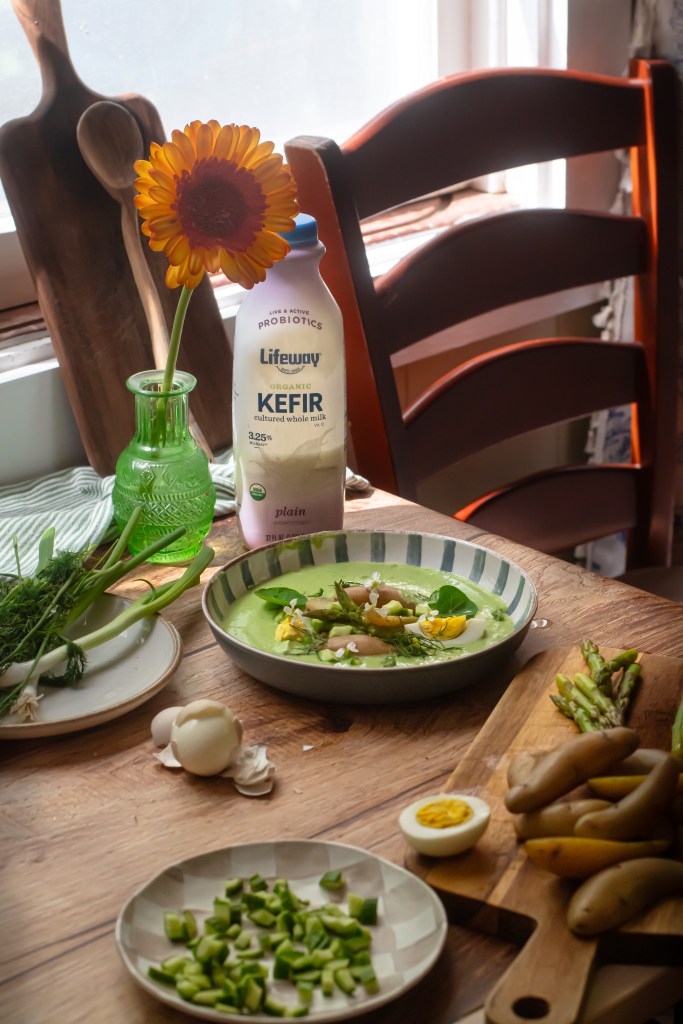
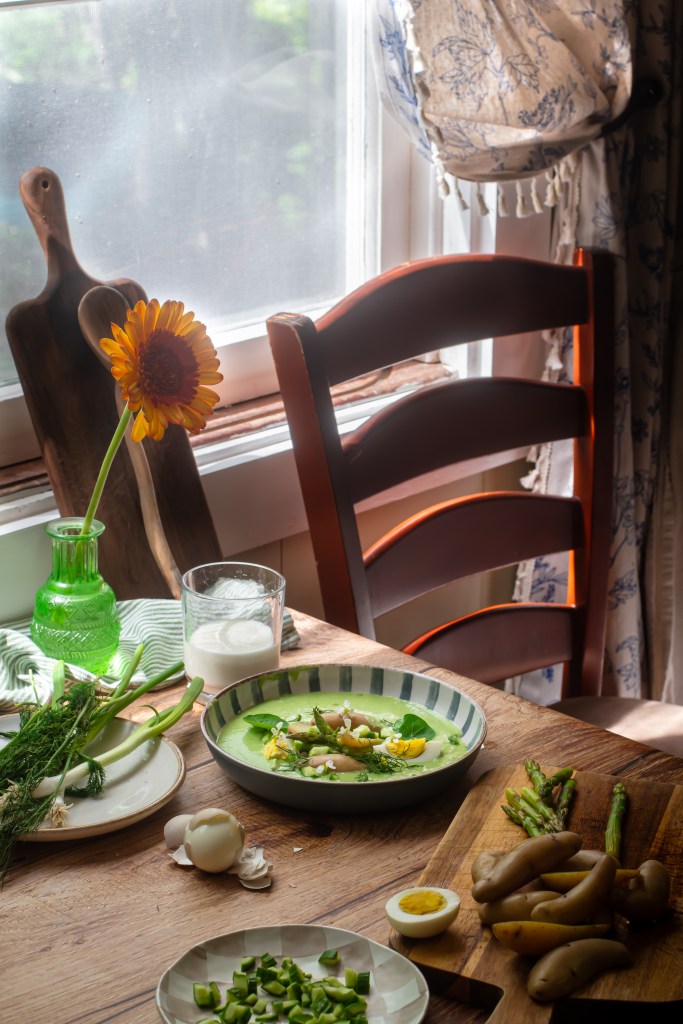
Dressed up with hardboiled eggs, cucumbers and fresh summer herbs
As the summer heat sets in, traditional cuisines around the world have long relied on cold soups to bring refreshment and nourishment. In Eastern Europe, cold soups aren’t just a seasonal treat, they’re a cultural staple. From Lithuania’s šaltibarščiai to Poland’s chłodnik, these soups are both satisfying and hydrating. At the heart of many of these recipes lies one ingredient that gives them a creamy consistency and tangy flavor: kefir!
Taking inspiration from the many Eastern European cold soups, I partnered with Lifeway Kefir and created an ideal summer soup with seasonal asparagus, fingerling potatoes ( optionally small sweet new potatoes work just as well), cold crunchy cucumber and a mix of bright green herbs. The color packs a punch and so does the flavor.

What Are Cold Soups in Eastern European Cuisine?
Cold soups in Eastern Europe are vibrant, nutrient-dense meals that combine fresh vegetables, herbs, eggs, and sometimes meat or fish. They’re quick to prepare, easy to digest, and ideal for warm climates. The winning factor is that they don’t require the simmering of a traditional soup.
Cold soups layer the seasonal flavors of fresh produce, straight from the garden, farmers market or from your local grocery into one bowl of satisfying bright and nutrient dense soup.
Popular Varieties Include:
- Šaltibarščiai (Lithuania): A stunning beet-based soup made with kefir, cucumbers, dill, and boiled eggs. Often served with hot potatoes on the side.
- Okroshka (Russia, Ukraine): A chilled soup made from diced potatoes, cucumbers, radishes, herbs, eggs, and sausage or ham, traditionally topped with cold kefir or kvass.
- Tarator (Bulgaria): A light cucumber and dill soup with garlic and walnuts, often made with yogurt or kefir.
- Chłodnik (Poland): Very similar to Lithuanian šaltibarščiai, but often includes sour cream along with kefir or buttermilk, and features young beets, radishes, cucumbers, and hard-boiled eggs.
- Holodnyk (Ukraine): A beet and vegetable soup similar to chłodnik, made with kefir or sour cream, dill, spring onions, cucumbers, and sometimes boiled potatoes or eggs. It’s a refreshing, probiotic-rich dish enjoyed across Ukraine in summertime.
The Role of Kefir in Cold Soups
Kefir is a fermented milk drink with a slightly sour, tangy taste and a pourable consistency. It’s been a staple in Eastern European kitchens for generations and not just for drinking, but also as a base for dishes like cold soups.
Why Kefir Is the Perfect Base:
- Flavor: Its slightly tart flavor enhances the freshness of summer vegetables and herbs.
- Consistency: Kefir’s natural thickness provides creaminess without the heaviness of cream or full-fat yogurt.
- Probiotic Power: Rich in live cultures, kefir supports gut health and digestion a bonus when you’re eating something cold and raw.
Kefir for Lactose-Sensitive Stomachs
If you’re lactose intolerant or sensitive to dairy, kefir is a fantastic healthy option.
Why Lactose-Sensitive People Can Often Enjoy Kefir:
- Fermentation Reduces Lactose: The natural gut beneficial bacteria in kefir break down much of the lactose during fermentation.
- Gentle on Digestion: The probiotics in kefir can help regulate digestion and ease symptoms of bloating or discomfort.
- Improves Gut Flora: Regular consumption helps build a healthier gut microbiome, which can reduce overall sensitivity to dairy.
Nutritional Benefits of Kefir:
- High in calcium, vitamin B12, and riboflavin
- Full of complete proteins
- Naturally rich in probiotics, often more diverse than yogurt
Embrace the Cold Soup!
From Poland’s creamy chłodnik to Ukraine’s colorful holodnyk, cold soups made with kefir are a celebration of health, culture, and seasonal ingredients. These dishes offer the perfect balance of taste and nourishment, and kefir makes them accessible even to those with lactose sensitivity.
This summer explore Eastern European flavors and give your body, and your taste buds , something truly refreshing?
Chilled Asparagus and Fingerling Potato Soup
Ingredients
for the soup
2 Cups Organic Lifeway Kefir (plain)
1 cup very cold water
1 bunch asparagus, blanched. Crowns set aside fro garnish and stalks for soup
3 small persian cucumbers or 1 whole medium hot house cucumber
3 slices of stale or gently toasted sourdough bread
2 stalks of green onion
Generous bunch of dill, parsley and chives
Optionally ¼ cup fresh sorrel leaves
1.5 tsp salt
.5tsp sugar
Garnish:
5-6 boiled fingerling potatoes (small new potatoes can be substituted)
2 hard boiled eggs
Asparagus crowns
Soft herbs
If you have a garden this year and your radishes bolted before becoming radishes, the flowers are delicious and pretty as well. Feel free to add finely diced radishes to substitute for additional flavor and crunch.
FInely diced seeded persian cucumber
Method:
- Set eggs and potatoes to boil in well salted cold water.
Cool before slicing and adding to the soup
Set aside a few sprigs of soft herbs for garnish
- Into a high speed blender add in all of the soup base ingredients and blend until smooth. Taste for salt.
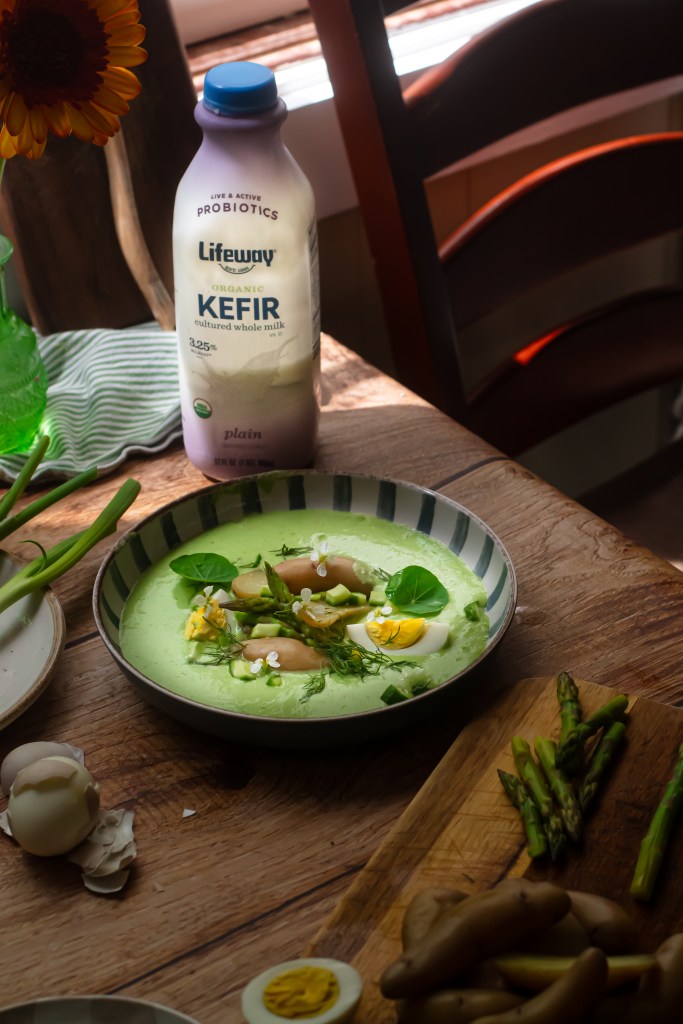
- Arrange whole garnishes in a soup bowl and pour over the soup. Garnish with herbs, and edible flowers.
Note: Soup will last in the refrigerator for up to 3 days. It may thicken slightly and may need a little water of additional kefir or water.
 The Wonky Stove